
Proxy Voting Guidelines
Institutions can use proxy voting guidelines to align shareholder votes with sustainability goals and ESG outcomes that serve their long-term interests.
For Institutional Investors
As institutions determine how to vote their shares at upcoming meetings, they can draw on a range of resources, including proxy voting policies and guidelines published by organizations that prioritize ESG risk management and sustainability outcomes.
Norges Bank Investment Management
They are a long-term and global investor with the mission to safeguard and build financial wealth for future generations. When they make voting decisions, they seek to further the long-term economic performance of investments and reduce financial risks associated with the governance of companies and their environmental and social practices. These guidelines reflect the Management Mandate for the Government Pension Fund Global and Norges Bank’s Executive Board Principles for Responsible Investment Management.
Click here to view Norges Bank’s latest global voting guidelines.
As You Vote
As You Vote is the most sustainability focused and justice aligned proxy voting policy available. Easy to use. Affordable. Fees support non-profit shareholder advocacy on risk related issues such as climate change, workforce opportunity, ocean plastics, industrial farming, political spending, and other under addressed risk issues.
2025 Proxy Voting Analysis
ICCR report analyzes how major asset managers voted on key proposals, offering insights into how institutional votes align with long-term risk and ESG issues.
Author- Julie Wokaty
Proxy voting is an essential part of investors’ fiduciary duty and stewardship. The proxy voting data of the largest asset managers offers useful insights into how they exercise their oversight of managements’ decision-making, reveals how they align their recognition of material risk with their asset owner clients and how they address significant environmental, social and governance (ESG) risks.
ICCR has worked with asset owners to engage asset managers on their proxy voting guidelines and records, and offered feedback to asset managers on their proxy voting records, policies and current disclosures. Such disclosure and transparency are essential. It allows clients, beneficiaries, and the public to see whether these powerful financial institutions are truly voting in alignment with long-term value creation, effective risk management, and responsible corporate citizenship. Our new report seeks to help investors do just that by comparing asset manager voting on key management and shareholder proposals in 2025.
Read the full report now.
Proxy Voting for Endowments
Proxy voting helps endowments act on corporate governance and ESG priorities while supporting long-term financial and sustainability goals.
What You Need to Know About Proxy Voting for Endowments
Proxy voting has historically been a cumbersome process for endowments; however, As You Vote, an ESG-aligned proxy voting platform, simplifies proxy voting and empowers endowments and other institutional investors to vote their proxies in line with their ESG mandates.
Proxy voting holds significant importance in aligning the mission of endowments with their investments. As You Vote simplifies this underutilized tool and enhances the process so endowments can exercise their right to vote their proxies and meet their active engagement goals without the increased demands of time and expertise. This seamless, customizable platform supports endowments so they can act on corporate governance issues that matter to their long-term economic interest.
ABOUT THE INTENTIONAL ENDOWMENTS NETWORK
The Intentional Endowments Network (IEN) is a peer learning network of 200+ asset owners, asset managers, consultants, OCIOs, and nonprofit partners. An initiative of the Crane Institute of Sustainability, IEN works to advance the field of sustainable investing and encourage endowments and institutional investors to allocate capital in a way that creates a low-carbon, equitable, and regenerative economy.

The complete guide to proxy voting
Anyone with a 401(k) or other investments owns company shares and is, therefore, a shareholder. Proxy voting lets investors cast votes on company decisions to manage risks.
What does Proxy Voting mean?
Anyone with a 401(k) or other investments owns company shares and is, therefore, a shareholder. Proxy voting is the process, and proxy voting guidelines are the principles and rules that ensure those people and institutions still have a voice. In a recent Vanguard survey, the majority of investors expressed a desire to use that voice, with 58% saying they were more likely to invest in a fund if they could influence proxy voting decisions.
In a shareholder or corporation's absence, an individual or firm casts a proxy vote on their behalf. Because proxy voting is the single most important avenue by which publicly traded companies report to shareholders, following rigorous guidelines is essential. The 2025 proxy season introduced significant regulatory changes and new compliance requirements that make understanding these guidelines more critical than ever.
Read more to learn about the key components of Proxy Voting.
Own Your Vote
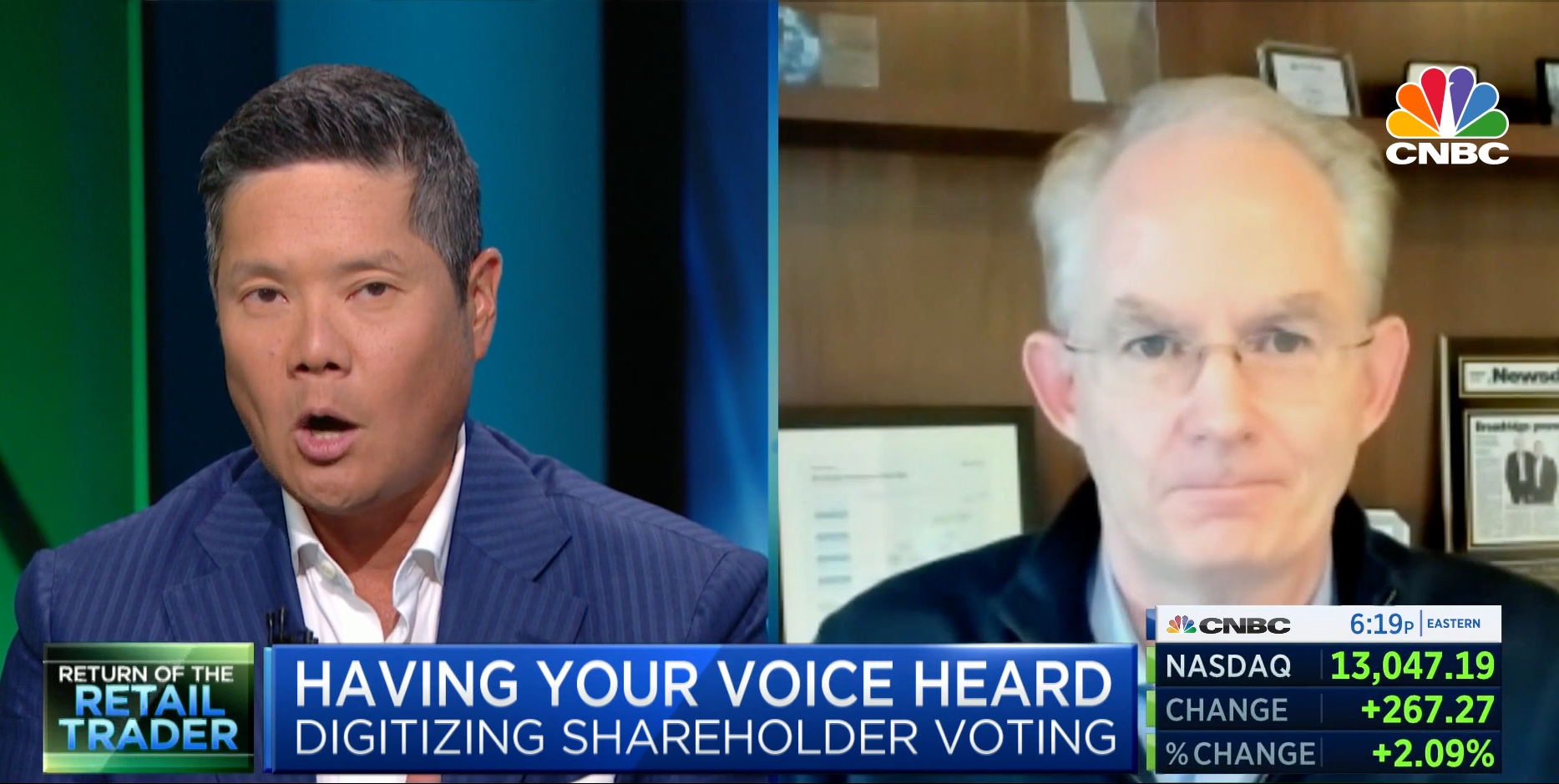
The site hosted by Broadridge explains proxy voting so shareholders understand their voting rights, how votes affect companies, and how to participate effectively.
Proxy Voting is how your voice can be heard
When you invest in a company or purchase a mutual fund, it makes you an owner. Ownership gives you a voice in how the company or fund is run. The main way shareholders can make their opinions heard is by voting on shareholder resolutions at meetings convened for that purpose.
Shareholders can participate in the decisions that have a real impact on the long-term performance of an investment. Whether voting on proposals that help shape the strategic direction of a company or its management, or the weighing in on the investment mandate of a mutual fund, shareholders have a voice in how their assets are managed. This is why we tell shareholders to own your vote.
"Voting at shareholder meetings, generally via a proxy vote, is one way you can exercise your rights as an owner."
Learn about the proxy process and issues you may need to vote on.
Understand the power of your voice and the impact your proxy vote can have.
See how easy it can be to vote your proxies and your voting options.
Learn more about your investments by reading the communications you receive.