
Shifting Policy Terrain on Shareholder Engagement
NATALIA RENTA , Associate Director, Corporate Governance and Power, Americans for Financial Reform Education Fund
The current administration has hit the ground running with policy changes designed to stymie shareholder engagement and corporate accountability, with particularly visible and harmful attacks targeting corporate progress on racial equity. Our opponents laid the groundwork for these actions through bills passed by the House of Representatives last Congress and Project 2025.
One of the first executive orders Trump issued tasked the Attorney General with writing a report with recommendations on how to encourage the private sector to end diversity, equity, and inclusion (DEI) initiatives. It also tasked the Attorney General and other agency heads with coming up with a “strategic enforcement plan” to “deter DEI programs or principles.” While a judge temporarily blocked implementation of portions of this and another anti-DEI executive order, many large corporations quickly pulled away from their DEI initiatives.
Meanwhile, the Securities and Exchange Commission (SEC) took various steps to tilt the shareholder advocacy playing field in favor of corporate boards and executives and against shareholders pushing them to address important risks. First, the SEC wreaked havoc by updating a Q&A that, in effect, incentivizes large asset managers to cast pro-management votes and halt any positive engagements with companies on critical issues shareholder advocates have put to the fore. It does so by expanding the types of shareholder advocacy that could be construed as “changing or influencing” control of a company, which would trigger further regulatory requirements from investors who own over 5% of a company’s shares. Following the release of the Q&A, BlackRock and Vanguard temporarily halted meetings with companies.
The SEC also made it harder for shareholder proponents to get their voices heard by issuing Staff Legal Bulletin 14M, which changed how the SEC staff evaluates company requests to effectively let them exclude shareholder proposals from proxy statements. As Commissioner Crenshaw noted, this bulletin “moves the goalposts smack dab in the middle of this year’s shareholder proposal process.” She also noted that corporations will be able to make additional arguments to exclude shareholder proposals while shareholders won’t be able to change their proposals to be in line with the parameters set by the new legal bulletin.
Unfortunately, we can expect more actions by the SEC to further incentivize asset managers to cast pro-management votes, coerce proxy advisors to recommend pro-management votes, weaken corporate disclosures, and make it harder for shareholder proponents to get their proposals in proxy statements.
We can also expect detrimental shifts in policy from the Department of Labor as it will likely attempt to rescind a Biden-era rule that makes clear ERISA fiduciaries can take into account relevant environmental, social, and governance factors when making investment decisions and encourages fiduciaries to exercise shareholder rights, including proxy voting. Republican Attorneys General sued to block the rule, but a district court judge in Texas has upheld the rule twice, including this past February.
As the policy terrain continues to shift, shareholder advocates will have to remain vigilant and experiment with new strategies to get their voices heard and make change.
For more perspectives on the 2025 Proxy Season, click here.

ICCR Letter to BlackRock on Integrating ESG Risk Factors
In November of 2024, ICCR wrote Larry Fink, the CEO of BlackRock, expressing a number of concerns regarding BlackRock’s 2024 proxy voting record on shareholder proposals related to environmental and social and governance (ESG) risks.
Dear Mr. Fink,
We are writing on behalf of the Interfaith Center on Corporate Responsibility (ICCR), a coalition of over 300 global institutional investors that collectively represent more than $4 trillion in managed assets, to reflect the concerns of a number of investors and clients regarding BlackRock’s 2024 proxy voting record on shareholder proposals related to environmental and social and governance (ESG) risks. Our members, many of whom are shareholders and clients of BlackRock, are long-term investors who have raised these concerns with you before through conversations and correspondence.
While we are mindful of the recent pressures fund managers face from parties attempting to discredit ESG, the fiduciary case for integrating material ESG risk factors into investment decisions and proxy voting is clear and irrefutable. BlackRock’s own research1 indicates that the long-term implications of inaction on climate change could reduce global economic output by nearly 25 percent over the next two decades, making addressing climate change a material issue for fiduciaries. Yet despite this, BlackRock's recently released 2024 Global Voting Spotlight reports that the firm “supported (only) four out of the 161 shareholder proposals on climate and natural capital that we voted on”. This was 2.5% of votes cast on climate resolutions. The firm’s proxy voting record on shareholder resolutions related to impacts on people was no better as BlackRock “supported 16 out of the 332 shareholder proposals we voted on (~5%), 14 at U.S. companies and two in EMEA”. We believe this an abdication of fiduciary duty and is also bad business.
BlackRock’s survey of institutional investors clearly indicates that your clients care about proxy voting on sustainability (which emerged as the number one criterion for selecting managers by 20% of 200 institutional investors surveyed, second only to “access to proprietary deals’ - selected by 23% of respondents) so you will not be surprised that we are raising these concerns again.
Furthermore, BlackRock’s 2024 proxy voting record and rationale appear at times to be unclear. The most recent NPX filings indicate BlackRock voting against disclosure asks that it supported only last year, and offering vague voting rationale on other asks arguing that: “The request is either not clearly defined, too prescriptive, not in the purview of shareholders, or unduly constraining on the company”. The 2024 Global Voting Spotlight also indicates that in over 60% of the cases, BlackRock did not support a shareholder resolution because the "company has a process in place to address business risk” even in cases when the company did not make appropriate disclosures about the processes in place to address the issue(s) to the shareholders, the proponents or the SEC. At DexCom, BlackRock opposed a majority supported 2024 shareholder proposal calling for political spending disclosure in an election year. This is a clear example of BlackRock’s understanding of material risks raised by shareholder proposals diverging from the majority of shareholders at the company. Given how important proxy voting on sustainability is to your clients we hope you will address some of these apparent inconsistencies.
In February 2024, we welcomed BlackRock’s announcement that it was developing a new sustainability-focused stewardship offering for clients who want its active ownership work to drive decarbonization and sustainability outcomes3. The announcement explained that this service was in response to client demand as a survey of 200 institutional investors globally, representing nearly $9tn in assets under management indicated that 98% of them have set some kind of transition investment objective for their portfolios. However if managing climate risk is a key element in maximizing long-term value for clients then we would expect BlackRock to pursue that consistently as part of your fiduciary duty. BlackRock’s own Resilience Through Change; 2024 Insurance Global Report indicates that 99% of the 410 senior executives representing US 27T of AUM surveyed reported having set at least one type of transition objective within their investment portfolio, a clear indication of the materiality of climate risks among the majority of that sector.
As we look at the hundreds of climate related and social resolutions, we believe many more than 4 resolutions make a strong business case related to shareholder value and are not overly prescriptive. It seems like BlackRock has instituted a new high bar for shareholder resolutions that is almost impossible to meet. We are concerned about what motivated this change and fear that pressure from conservative investors played a role in the shift. In addition, we note that many other investment firms guided by the same fiduciary standards as BlackRock have a much higher number of percentage of votes for resolutions.
Furthermore, while we appreciate your case-by-case approach to assessing shareholder proposals, ICCR members and many of your clients are investors with diversified portfolios and ignoring systemic risks like climate and racial justice may benefit one of their companies but passes that cost on to the other companies in their portfolio. PRI and CAF’s recent guidance on stewardship also states that: “Using influence to promote short-term performance or the performance of individual companies, industries, or markets, without regard to overall value, does not constitute stewardship”.
There is growing evidence that asset owners are becoming increasingly concerned about asset manager’s proxy voting on ESG shareholder proposals5 and many are taking action6. And it seems these concerns are well placed. The UK Asset Owner Stewardship Review highlights a growing misalignment between asset owners and asset managers when it comes to exercising stewardship and proxy voting at major Oil and Gas companies. This misalignment is more pronounced (i) in recent years, (ii) on shareholder resolutions (vs management proposals) and (iii) at American companies (vs. European ones). There is also worrying evidence that asset managers’ corporate engagements are not moving the needle with companies.
As clients and shareholders our members want to see BlackRock as both a market and an ESG leader and would welcome efforts on behalf of the firm’s leadership to reiterate their commitment to ESG and to commit to a critical review of their proxy voting guidelines and record. We welcome the opportunity to continue the dialogue with you on the issues raised.
Sincerely,
Josh Zinner, CEO Interfaith Center on Corporate Responsibility
Katie McCloskey, Vice President of Social Responsibility, Mercy Investment Services
David A. Klassen, Chief Investment Officer, The Pension Boards - United Church of Christ, Inc.
Matthew Illian, Director of Responsible Investing, United Church Funds
Ethan Birchard, Executive Director, Friends Fiduciary Corporation

Large investors benefit from smaller investors' right to file proposals
Heidi W. Hardin, General Counsel & Executive Vice President, MFS
Our investment process relies on a long-term orientation, deep fundamental research, and institutional risk controls. Our clients appoint us to help them achieve their investment objectives over the long term. Generally, our clients' objective is to maximize the financial return of their portfolio within appropriate risk parameters. MFS seeks to understand any factor that could impact our clients' investment returns over the long-term, including financially material environmental, social, and governance ("ESG") factors.
Heidi W. Hardin, General Counsel & Executive Vice President, MFS
Our investment process relies on a long-term orientation, deep fundamental research, and institutional risk controls. Our clients appoint us to help them achieve their investment objectives over the long term. Generally, our clients' objective is to maximize the financial return of their portfolio within appropriate risk parameters. MFS seeks to understand any factor that could impact our clients' investment returns over the long-term, including financially material environmental, social, and governance ("ESG") factors.
MFS has historically supported a wide variety of shareholder proposals on ESG topics…. because we believed that the proposals encouraged improved governance or provided shareholders with insight into the company's management of environmental, social, reputational or regulatory risks… Over the years, we have seen smaller shareholders use the shareholder proposal process to initiate and encourage improved governance (e.g., declassification of boards and the introduction of proxy access) and better management of financially material environmental and social risks (e.g., disclosure of risks from climate-related regulatory changes).
As a large institutional investor, we generally have access to management teams and directors that smaller shareholders may not have. The current shareholder proposal process offers smaller shareholders the opportunity to have management teams and boards consider the unique, and potentially financially material, risks they have identified.
As an active investor, we believe that it is to our client's benefit to understand the views of other shareholders, as this information can augment our understanding of the risks and opportunities inherent in the companies we own. As such, we would view any action to limit some shareholders' rights to file proposals as an action to limit all shareholders' ability to fully consider all risks and opportunities of their investment.
Note: MFS is a global asset management firm with $485 billion in assets under management (as of August 31, 2018).
Read the full text here.
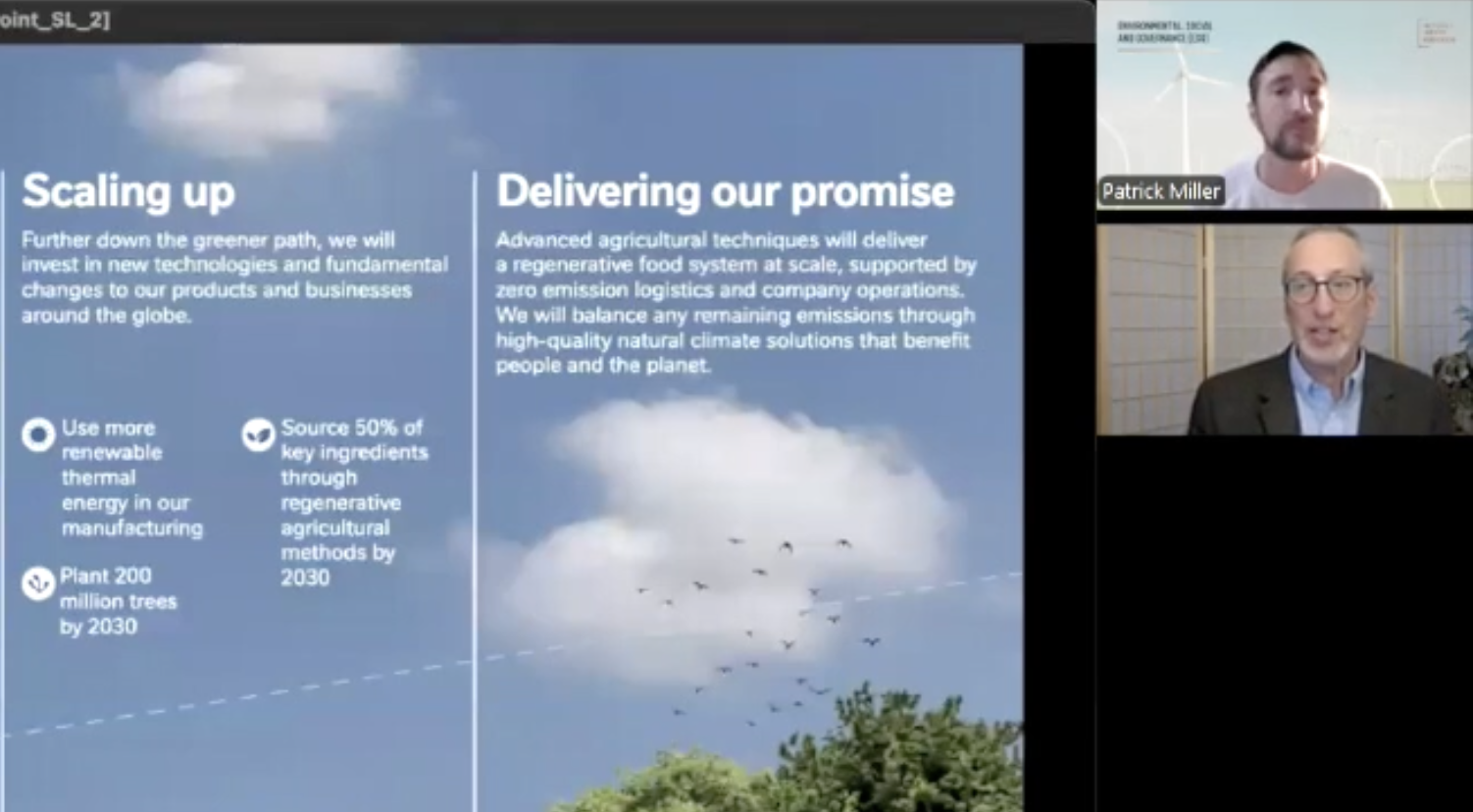
How Investors Deploy Shareholder Proposals
Patrick Miller speaks with Sanford Lewis regarding investors who file shareholder proposals at publicly-traded US companies related to social and environmental issues. They discussed the process for submitting these proposals pursuant to SEC rules.
HOST: Patrick Miller is the Founding Attorney at Impact Advocates APC.
*Disclaimer: The information in these recordings is provided for informational purposes only. You should consult with an attorney before you rely on this information. This information should not be seen as legal advice and does not create an attorney-client relationship. This interview is meant to be a general discussion and may not include all relevant information regarding the issues covered.

Why Faith Groups Have Historically Practiced Responsible Investing
The full statement can be found on ICCR’s website.
Religious organizations steward their organizational finances and the investments managed on behalf of their constituents and beneficiaries in alignment with the beliefs, teachings, and values of their respective faiths. Many religious organizations develop investment guidelines, which include strategies such as screens to exclude industries that they believe cause injury to society, shareholder engagement with portfolio companies to mitigate environmental and social harm, and investing in companies or projects that are making a direct and positive impact. This practice, known as faith-consistent investing, is one form of what today is commonly referred to as sustainable and responsible investing. Faith-consistent investing is a fundamental right protected under the First Amendment, which guarantees both free speech and religious freedom, and ensures that investors are able to make their investment decisions in accordance with their beliefs.
The Interfaith Center on Corporate Responsibility (ICCR) is a coalition of over 300 faith and values institutional investors who, for more than 50 years, have been leaders in faith-consistent and sustainable investing. Our genesis as an organization is grounded in the advocacy of multiple faith groups to address the racist apartheid regime in South Africa. Faith-consistent investing leads religious investors to assess how corporate policies and practices may adversely impact the health of people and the planet, which has a direct impact on the long-term performance of their portfolios.
Faith-based investor engagements with portfolio companies, through dialogue and the filing of shareholder proposals, are a natural extension of these beliefs and are central to both our duties as trusted fiduciaries seeking competitive returns and our responsibilities as faithful stewards supporting the fundamental values of our religious traditions. For this reason, we are concerned about any attempts by legislators or policymakers to interfere with investors’ fundamental freedom to make investment choices and/or engage with portfolio companies in alignment with their investment philosophies and institutional values. This includes letters received from the House Judiciary Committee in 2024 by several of ICCR’s faith-based members requesting informational disclosures under the pretense of exploring violations of antitrust laws.
While each faith institution has its own set of priority issues that it addresses through its respective ministries and advocacy work, there are many issues where faith investors’ interests converge. Actions to mitigate the climate crisis ravaging our planet, to uphold human rights, including the fair treatment of workers, and to ensure equitable and affordable access to healthcare are just a few examples of priority issues of common concern among many faiths. The 2016 Edinburgh Finance Declaration is one example of the world’s leading faiths articulating their shared values. We believe that companies that adopt forward-looking policies and practices to mitigate environmental and social risks are well-positioned for long-term financial success and value creation. Conversely, companies that ignore these risks may endanger the performance of the capital we are called to steward, and impose enduring external costs on society, the economy, and the planet that sustains us. Over the past 50+ years, ICCR member engagements with corporations on these issues have resulted in improved conditions for various stakeholders, including workers, customers, communities, and shareholders. For instance, most of the world’s faiths emphasize stewardship of the planet, care for creation, and moral responsibility toward the environment, which makes them deeply concerned about the climate crisis. Faith investors working in climate-vulnerable communities witness firsthand how climate change adversely affects these areas. Without the adoption of meaningful climate mitigation and adaptation measures, extreme poverty and inequality, risks to land, food and water security, forced migration and geopolitical conflict, along with global health risks, will all intensify. Consequently, faith investors often align with other like-minded investors to tackle climate risk and advocate for a reduction of GHG emissions from our portfolio companies. Faith-based investors actively promote worker justice, which includes workplace health and safety protections, the provision of a living wage, and the freedom to associate and engage in collective bargaining. Faith-based investors have advocated for health equity, engaging with the world’s largest healthcare companies to ensure that medicines and healthcare services are affordable and accessible reaching those most in need.
Importantly, while we often cooperate in investor spaces around strategies to spur corporate action, we make independent investment decisions to provide risk-adjusted returns to our individual constituents and beneficiaries in line with our respective faith beliefs. The U.S. Constitution provides that “Congress shall make no law respecting an establishment of religion or prohibiting the free exercise thereof,” and the First Amendment protects the religious liberty that is foundational to this great nation. This ban against government interference in faith-consistent practices is essential when considering all aspects of the life and work of religious institutions, including their investment decisions. It preserves their autonomy to invest their organizational assets and the pensions of their millions of beneficiaries in a manner consistent with their religious beliefs. In recognition of the constitutional limits of entanglement between the federal government and religious institutions, Congress included a Church plan exemption in the Employee Retirement Income Security Act of 1974 (ERISA).
We want to reiterate our belief that companies committed to addressing their impacts on society and the environment are better positioned for financial success over the long term. For this reason and because our faith calls us to do so, we will continue to invest and engage with our portfolio companies to realize that goal.

S&P Global Market Intelligence: SEC proposed rule would have blocked 614 ESG resolutions since 2010, data shows
Author: Esther Whieldon
Since 2010 more than 600 environmental, social and governance-related resolutions likely would have never advanced under a newly proposed rule by the U.S. Securities and Exchange Commission, according to data the Sustainable Investments Institute shared with S&P Global Market Intelligence.
The SEC in November 2019 proposed to increase the amount of support a shareholder resolution required to be reconsidered in the years following an initial vote. Rather than resolutions needing at least 3% support the first year, 6% the second year, and 10% the third and subsequent years after an initial vote to be reconsidered, the SEC would raise those thresholds to 5%, 15% and 25%, respectively. The agency estimated the changes would cut the number of shareholder proposals by 7%.
While the rule has yet to be finalized, the Sustainable Investments Institute, or Si2, compiled a database of ESG resolutions voted on from the beginning of 2010 through Nov. 18, 2019. Si2 found that 614 ESG-related resolutions, or about 30%, of the 2,019 proposals voted on at company annual meetings over that period would not have been eligible for resubmission. That total is almost three times the number of resolutions — 206 resolutions — that could have failed existing threshold requirements over that time, according to Market Intelligence's analysis of the data.
Of the 614 potentially impacted resolutions, political activity, climate change and human rights issues would have taken the biggest hit.
Companies are coming under increased pressure from investors to disclose how ESG risks could impact their bottom line, and they are addressing those risks and opportunities. But groups such as the U.S. Chamber of Commerce and Business Roundtable have pushed for reforms to the shareholder resolution process.

Business Roundtable Must Defend Shareholder Access to Proxy
We write today for two reasons. The first is to commend the Business Roundtable (BRT) and the 181 CEOs who endorsed the new Statement on the Purpose of the Corporation(the “Statement”), embracing the importance of companies’ commitment to key stakeholders. The statement acknowledges a central tenet of ICCR’s core philosophy: that companies focused on the well-being of all their key stakeholders and not just on boosting short-term shareholder returns will be more successful over the long term. A growing community of ESG investors have been supportive of companies demonstrating leadership in corporate responsibility for years, with the firm belief that these companies are building long-term value for shareholders.We expect the BRT CEO statement will stimulate an important dialogue within companies,investors and the broader public.
However,the principles clearly articulated in the Statement makes the BRT’s continuing lobbying and public statements against shareholder resolutions dealing with environmental, social and governance issues even more perplexing. We urge the BRT to reassess its campaign against shareholder resolutions in light of the new statement.
We read with interest the June 3,2019 BRT letter to the Securities & Exchange Commission (SEC Letter)and take issue with several of the assumptions used to support the BRT’s argument. The BRT’s characterization of the issues raised in the proxy process, as well as the motivations of shareholder proponents, is a simplistic description that is false and misleading.
In a letter to the Business Roundtable, ICCR’s CEO Josh Zinner highlights the inconsistencies in the BRT’s statement and its ongoing attack on the shareholder proposal process, and urges the BRT to align its positions on the proxy process in furtherance of a corporate purpose that serves all stakeholders, and leads to long-term value.
We write today for two reasons. The first is to commend the Business Roundtable (BRT) and the 181 CEOs who endorsed the new Statement on the Purpose of the Corporation(the “Statement”), embracing the importance of companies’ commitment to key stakeholders. The statement acknowledges a central tenet of ICCR’s core philosophy: that companies focused on the well-being of all their key stakeholders and not just on boosting short-term shareholder returns will be more successful over the long term. A growing community of ESG investors have been supportive of companies demonstrating leadership in corporate responsibility for years, with the firm belief that these companies are building long-term value for shareholders.We expect the BRT CEO statement will stimulate an important dialogue within companies,investors and the broader public.
However,the principles clearly articulated in the Statement makes the BRT’s continuing lobbying and public statements against shareholder resolutions dealing with environmental, social and governance issues even more perplexing. We urge the BRT to reassess its campaign against shareholder resolutions in light of the new statement.
We read with interest the June 3,2019 BRT letter to the Securities & Exchange Commission (SEC Letter) and take issue with several of the assumptions used to support the BRT’s argument. The BRT’s characterization of the issues raised in the proxy process, as well as the motivations of shareholder proponents, is a simplistic description that is false and misleading.

Linking Investor Engagement with Financial Value
Julie Gorte, Impax Asset Management
Some observers tend to see vote totals on shareholder proposals as binary — either they pass or they don’t. But it is useful to understand the nuances, too. In accounting, a shareholder holding at least 20 percent of a company’s shares has a significant or active interest, and that is something that can influence management decisions. That provides a different lens through which to see the 30 percent average support for shareholder proposals than a simple pass/no pass view. It’s also an indicator that it’s not just a bunch of frustrated political activists interested in these proposals; it’s an indication that a significant proportion of a company’s investors see them as relevant to the company’s financial performance.
Julie Gorte
Senior Vice President for Sustainable Investing, Impax Asset Management
Goldman Sachs’ equity research report “Shareholder Engagement in the Age of Transparency” says: “We believe shareholder resolutions can offer additional insight into emerging material risks and externalities for issues, as well as management responsiveness.”[1] The report also notes that support for environmental and social shareholder proposals has been rising for several years, with nearly 30 percent of votes going in favor of shareholder proposals. Considering that insider ownership for U.S. companies averages about 13.6 percent,[2] it is quite possible that the support for these proposals among outside shareholders is significantly higher.
A recent study [3] that looked at 847 engagements with 660 companies around the globe over a decade (2004-2014) found that successful engagements — those that did improve ESG performance — were correlated with higher sales growth without changing profitability. Moreover, a portfolio of firms that were engaged by shareholders outperformed a matched portfolio of companies that were not engaged by 4.7 percent. Another study,[4] which examined 2,152 ESG engagements at 613 publicly traded firms over a decade (1999–-2009), also found that the companies that were the subjects of these engagements had higher abnormal returns of around 1.8 percent during the year following the engagement, and the successful engagements were associated with higher abnormal returns of 4.4 percent over the following year (and zero for the unsuccessful ones).Results such as these help to explain why the votes in support of these proposals have gone up: They are about things that can and do affect financial performance. For example, of the proposals that did receive majority votes of support in 2018,[5] the engagements included topics that absolutely had financial relevance: the opioid crisis, coal ash risks, climate change and greenhouse gas emissions. Consider that one drugmaker’s stock price lost 80 percent of its value[6] after it was indicted for misleading doctors and public health officials about the effects of its opioid addiction treatment, and one of the major manufacturers of opioids, Purdue Pharmaceuticals, is reportedly looking into declaring bankruptcy in the face of expanding litigation.[7] On the climate change front, 2019 witnessed what The Wall Street Journal described as the world’s first climate change bankruptcy,[8] after PG&E declared Chapter 11 as its liabilities and penalties for destructive wildfires skyrocketed.
Bankruptcies and stock price collapses happen all the time, of course; is there any evidence that proactive work to be more sustainable might lessen them? Yes, plenty. Several recent papers have focused on what we often call tail risk — highly impactful events that can have major implications for value but that are relatively rare historically. One recent paper [9] provides quantitative evidence that investors see strong ESG practices as a hedge against what we call a left-tail risk, or large drop in value. This could be because better sustainability practice reduces firms’ vulnerability to litigation and environmental disasters, both of which can make noticeable dents in companies’ reputational value. Another recent article noted that ESG, while not a traditional style factor, was known to reduce risk in portfolios. [10] A 2018 report from MSCI [11] sheds additional light on that idea, noting that investors are interested in how ESG integration changes both systematic and stock-specific risks in portfolios over multiple time periods. Portfolios with higher ESG ratings had better risk-adjusted returns than their parent indexes.
Climate change, which is one of the main topics in shareholder proposals, is another good example of the connection with financial value. If not addressed, climate change could cost us perhaps five percent of gross domestic product annually in perpetuity,[12] and investors see it as a material source of several kinds of risk and opportunity. One recent paper [13] constructed a portfolio that had long positions in more carbon-efficient firms and short ones in carbon-inefficient firms, and that portfolio generated abnormal returns of 3.5–5.4 percent per year. Another study showed that low-carbon indexes have generally outperformed mainstream benchmarks.[14]
FOOTNOTES:
Derek R. Bingham, Tristyn Martin, Sharmini Chetwode, Christopher Vilburn, Evan Tylenda and SoYoung Lee, “Shareholder Engagement in the Age of Transparency,” Goldman Sachs Equity Research, June 12, 2019.
“Insider and Institutional Holdings by Sector (US),” Damodoran Online, Stern Business School, New York University, Jan. 2019.
Tamas Barko, Martijn Cremers, Luc Renneboog, “Shareholder Engagement on Environmental, Social, and Governance Performance,” European Corporate Governance Institute, May 31, 2017.
Elroy Dimson, Oguzhan Karakas, Xi Li, “Active Ownership,” The Review of Financial Studies, Aug. 12, 2015.
Heidi Welsh, “Proxy Season Review: Social, Environmental & Sustainable Governance Shareholder Proposals in 2018,” Sustainable Investments Institute, Nov. 9, 2018.
Theron Mohamed, “A UK Drugmaker’s Stock Crashed 80% After It Was Indicted for a ‘Truly Shameful’ Opioid-Addiction Scheme, Markets Insider, April 10, 2019.
Berkeley Lovelace Jr., “OxyContin-maker Purdue Pharma Reportedly Exploring Bankruptcy Amid Litigation Over Opioids,” CNBC, March 4, 2019.
Russell Gold, “PG&E: The First Climate-Change Bankruptcy, Probably Not the Last,” The Wall Street Journal, Jan. 18, 2019.
Michael Shafer and Edward Szado, “Environmental, Social, and Governance Practices and Perceived Tail Risk,” July 26, 2018.
Carlo Svaluto Moreolo, “ESG: The Sustainability Factor,” Investments & Pensions Europe, April 2018.
Guido Giese, Linda-Eling Lee, Dimitris Melas, Zoltan Nagy, Laura Nishikawa, “Foundations of ESG Investing,” MSCI, May 2018.
Nicolas Stern, “The Stern Review: The Economics of Climate Change,” Cambridge University Press, March 2014.
Soh Young In, Ki Young Park, Ashby H.B. Monk, “Is ‘Being Green’ Rewarded in the Market?: An Empirical Investigation of Decarbonization and Stock Returns,” Stanford Global Projects Center, April 19, 2019.
Oliver Oehri, Christoph Dreher, Christoph Jochum, “Climate-friendly Investment Strategies and Performance,” Center for Social and Sustainable Products and South Pole Carbon Asset Management Ltd., Nov. 7, 2016.
Investor Coalition Fights Opioids Crisis
By LAURA E. WEISS, CQ

It began as a suggestion from a county health official to leaders of a group of nuns’ money management program. They were addressing climate change, modern-day slavery and immigration — why not the opioid epidemic?
A year and a half later, the mammoth coalition of investors born from that idea wields $2.2 trillion of influence, urging the largest U.S. drug companies to take accountability for playing a role in the opioid crisis. The group, Investors for Opioid Accountability, has cut deals with companies in the business of making or distributing opioid painkillers to review how they oversee sales of the highly addictive drugs and make other corporate governance changes aimed at improving supervision of opioid sales.
“No one is untouched by the opioid crisis in the country — or even globally now as it’s beginning to turn out — but we lead with the investor lens because that is our responsibility and our duty to give an investor voice to it,” says IOA co-leader Meredith Miller. She says the coalition”s 46 members — including state treasurers, public pension funds, faith-based investors and union benefit funds — are hearing from their ministries, citizens or union members about the crisis.
***
IOA’s shareholder proposals include requests for reports on board oversight of risks related to opioid sales, mechanisms for recouping executive pay in the case of misconduct, disclosure of lobbying spending, independent board leadership and other adjustments to oversight mechanisms and how the CEO and other top leaders are paid.
***
IOA has claimed several victories so far. The coalition’s opioid risk report proposal won support from 62 percent of investors in Assertio Therapeutics Inc., which makes opioid painkiller Nucynta. The same proposal neared majority approval at AmerisourceBergen Corp., one of the “big three” U.S. drug wholesalers. IOA says it has a commitment from another large distributor, Cardinal Health Inc., to publish risk reports, recoup executive pay in cases of misconduct and split the roles of CEO and board chair. McKesson, the country’s sixth-largest company, and several manufacturers have also agreed to changes including reviews of how directors oversee opioid sales, avoiding votes on IOA’s proposals.

ESG factors as a good signal for future risk
Jane Jagd, Bank of America
What if we told you how to avoid stocks that go bankrupt?
We think you would listen. Environmental, Social & Governance (ESG) factors are too critical to ignore, in our view. In our earlier report ESG: good companies can make good stocks, we found that ESG-based investing would have offered long-term equity investors substantial benefits in mitigating price risk, earnings risk and even existential risk for US stocks — ESG would have helped investors avoid 90% of bankruptcies in the time frame we examined. Our findings were encouraging enough to warrant a closer look. We here assess how US corporations, regulators and investors are positioned for ESG, and how the market is responding.
ESG is the best signal we have found for future risk
Prior to our work on ESG, we found scant evidence of fundamental measures reliably predicting earnings quality. If anything, high quality stocks based on measures like Return on Equity (ROE) or earnings stability tended to deteriorate in quality, and low quality stocks tended to improve just on the principle of mean reversion. But ESG appears to isolate non-fundamental attributes that have real earnings impact: these attributes have been a better signal of future earnings volatility than any other measure we have found.
US corporates may be behind the curve . . .
Despite empirical evidence of its efficacy, ESG is not drawing much enthusiasm from US corporates. Among companies participating in our survey at our March 2017 BofAML US Investor Relations conference, almost half of the survey respondents indicated they have no resources dedicated to ESG initiatives, and no intentions of implementation. Globally, the theme is burgeoning: ESG-related regulations have doubled since 2015; over 6,000 EU member state companies will be required to publish disclosures; and 12 global stock exchanges require written ESG guidance – but not one is in the US!
. . . but investors are ahead of it & PE multiples are responding
In our May survey of BofAML institutional clients, 20% cited using ESG, well above the estimated 5% of float that corporations believe is held by ESG-oriented investors. In another investor survey, 66% raised issues on sustainability disclosures, and 85% called for improved disclosure in filings. And the investment industry is changing to accommodate governance: for the first time ever, FTSE Russell ruled out the addition of zero voting rights stocks, citing “concerns raised by shareholders.” The market is listening: shareholder-friendly companies have seen significant multiple expansion — and we see strong signs that this re-rating continues.
Read the full text here.

Shareholder Proposals and trouble at Bayer's Acquisition
In 2016, shareholder John Harrington, the president of Harrington Investments Inc., filed a proposal at Monsanto regarding health risks from the company’s flagship weedkiller Roundup. The proposal noted “an increasing number of independent studies assessing the toxicity of glyphosate, the active ingredient in Roundup, associate it with cancer, birth defects, kidney disease, and hormone disruption, causing world-wide concern about its safety”. The proposal requested a report assessing the effectiveness and risks associated with the company’s policy responses … to the impact of recent reclassification of glyphosate as “probably carcinogenic,” and quantifying potential material, financial risks or operational impacts on the Company in the event that proposed bans and restrictions are enacted.
On its 2016 vote, the proposal received 5.3% voting support. Refiled in 2017, it still only received 5.5% support. Yet, this relatively small group of shareholders proved to be prescient in identifying a material issue.
Only two months after Monsanto was acquired by the German pharmaceutical company Bayer in June 2018, a jury granted a $289 million award in a suit alleging public health threats and cancer of a plaintiff caused by Roundup. This news sliced billions of dollars from Bayer’s valuation. Bayer’s market capitalization has descended steeply in the following months, from $99.1 billion as of August 10, 2018 (the date of the jury verdict), to $64.8 billion as of November 20, 2018 and after losing another jury verdict, $56.2 billion by May 24, 2019.